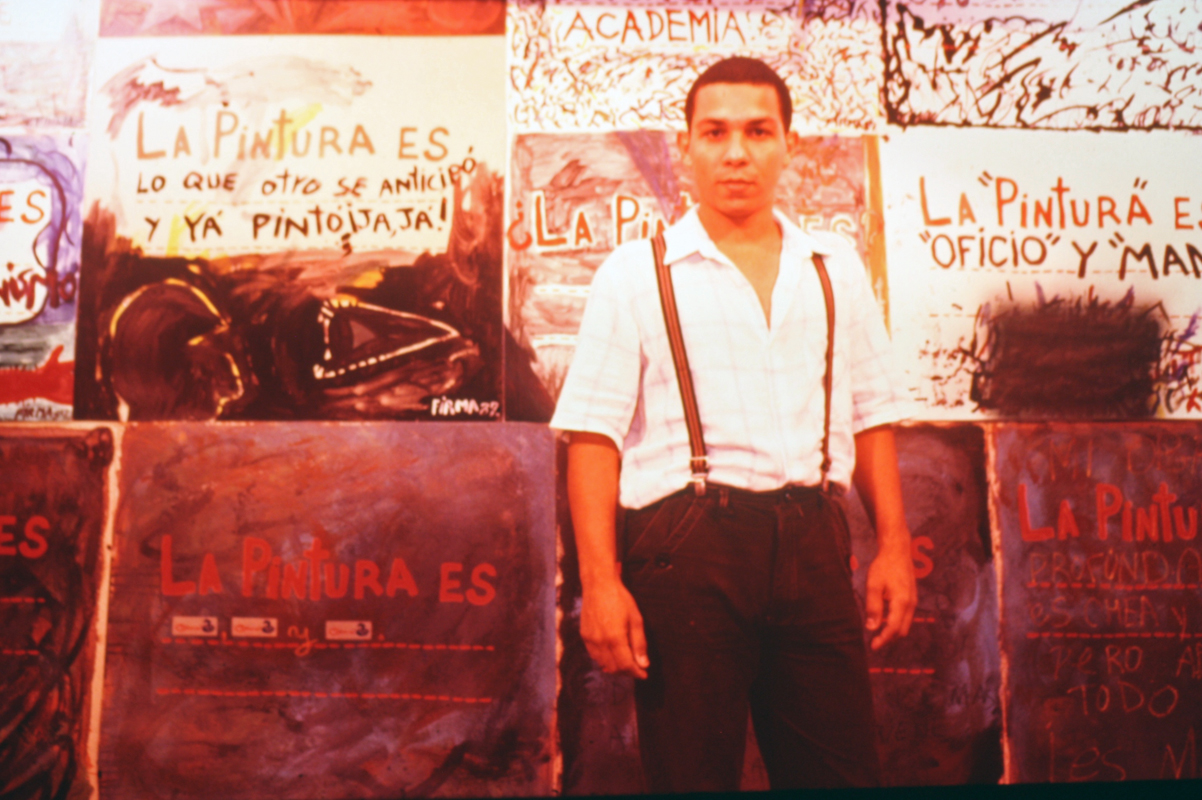
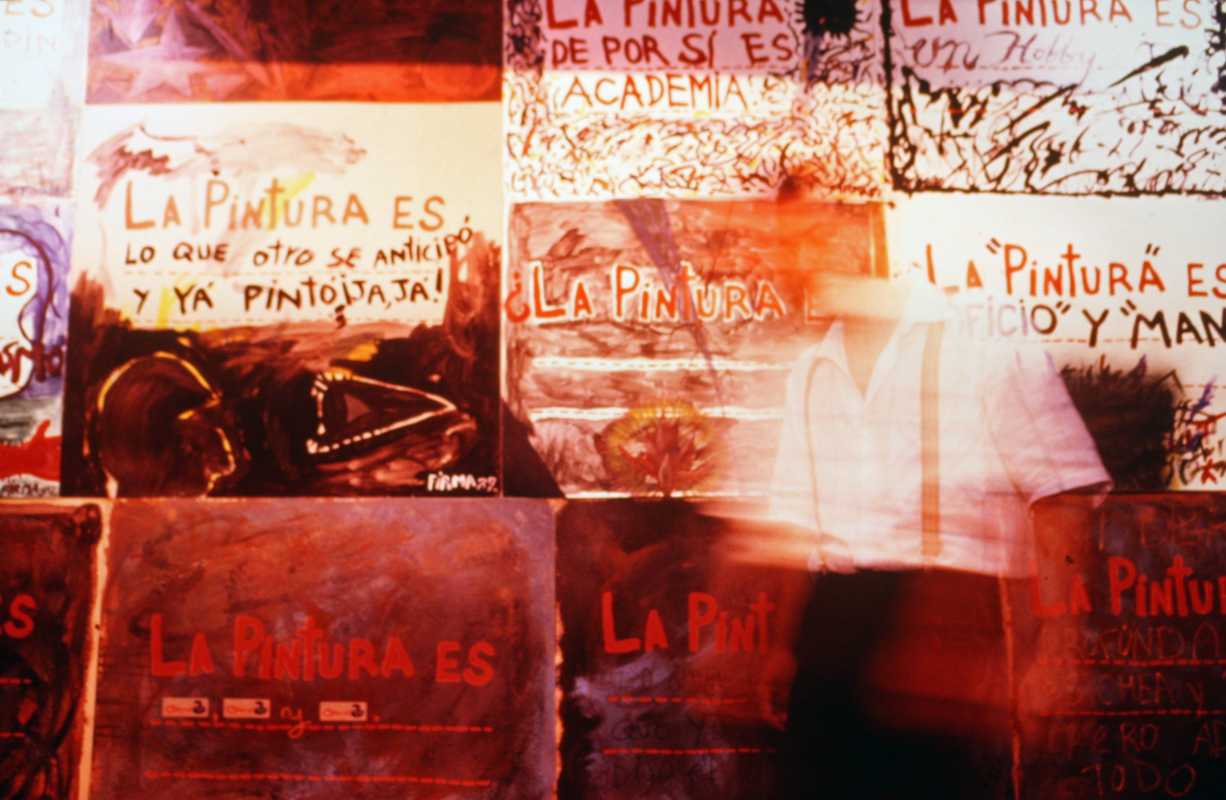
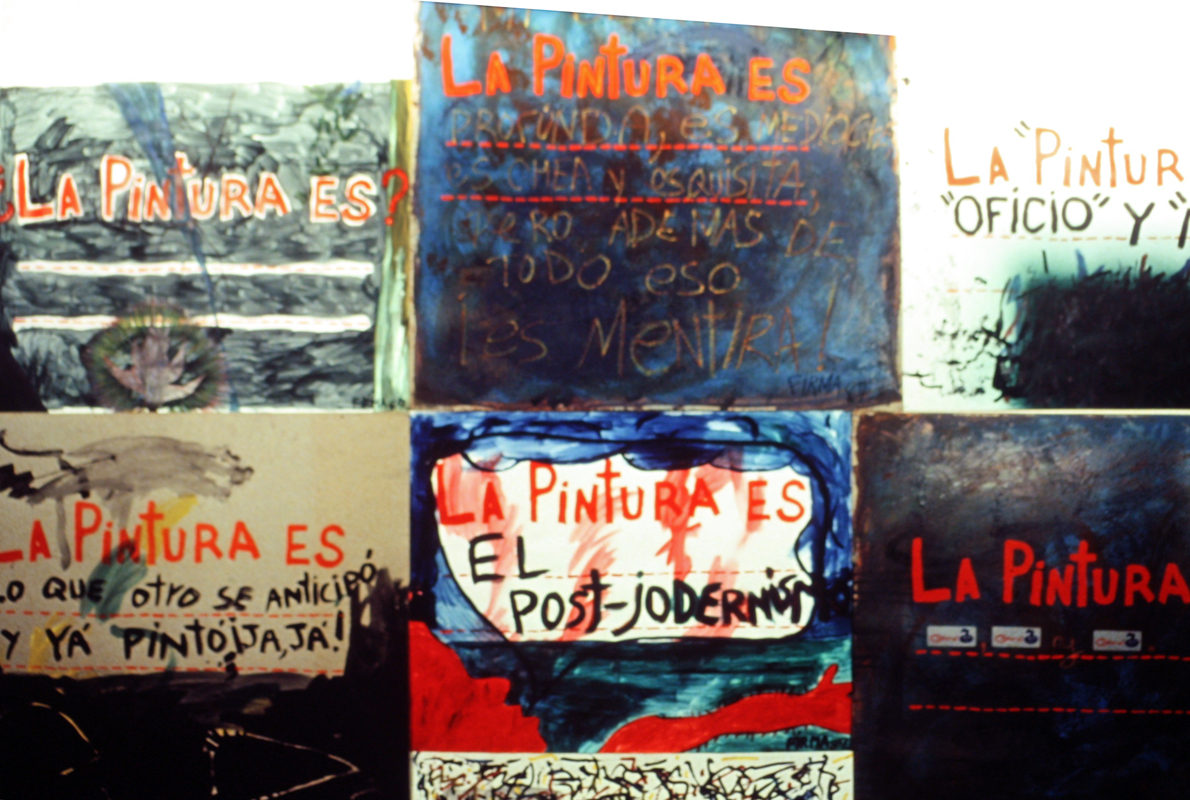
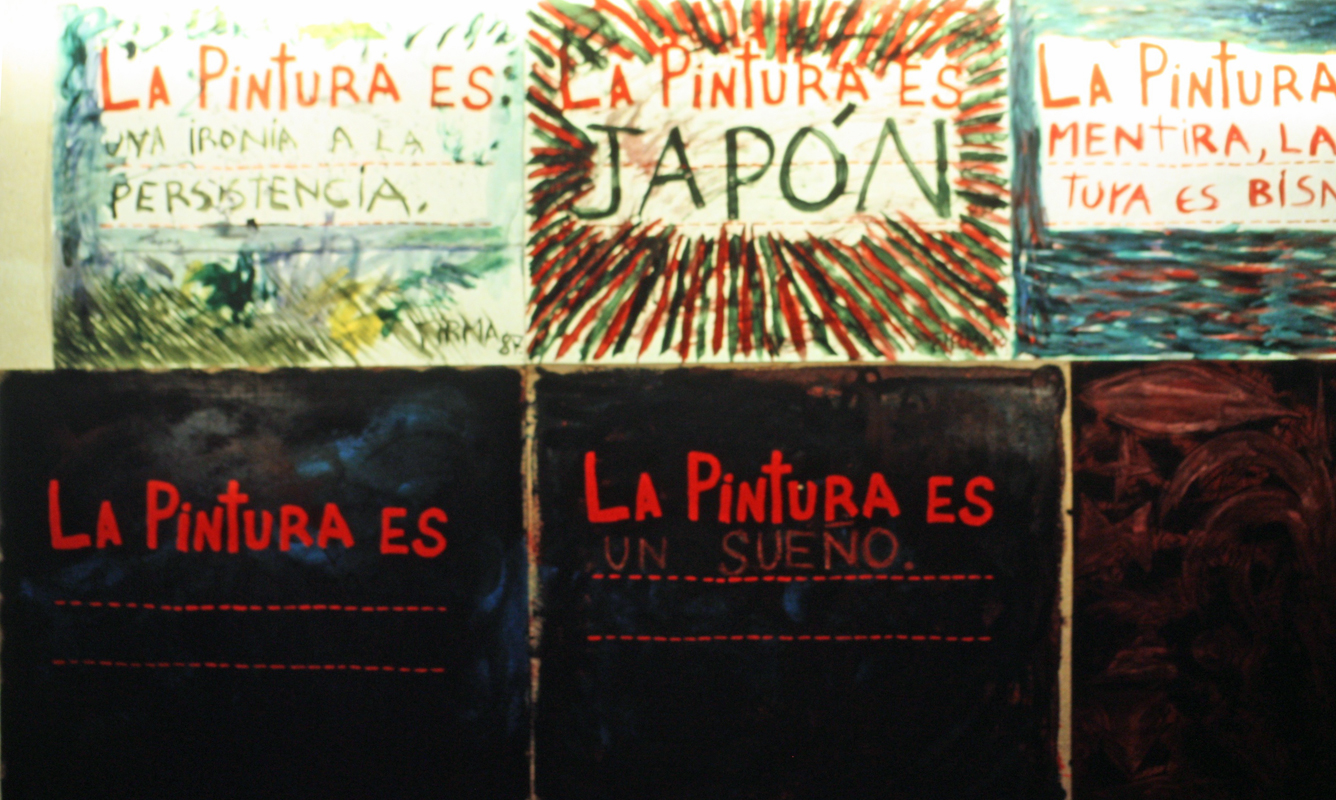
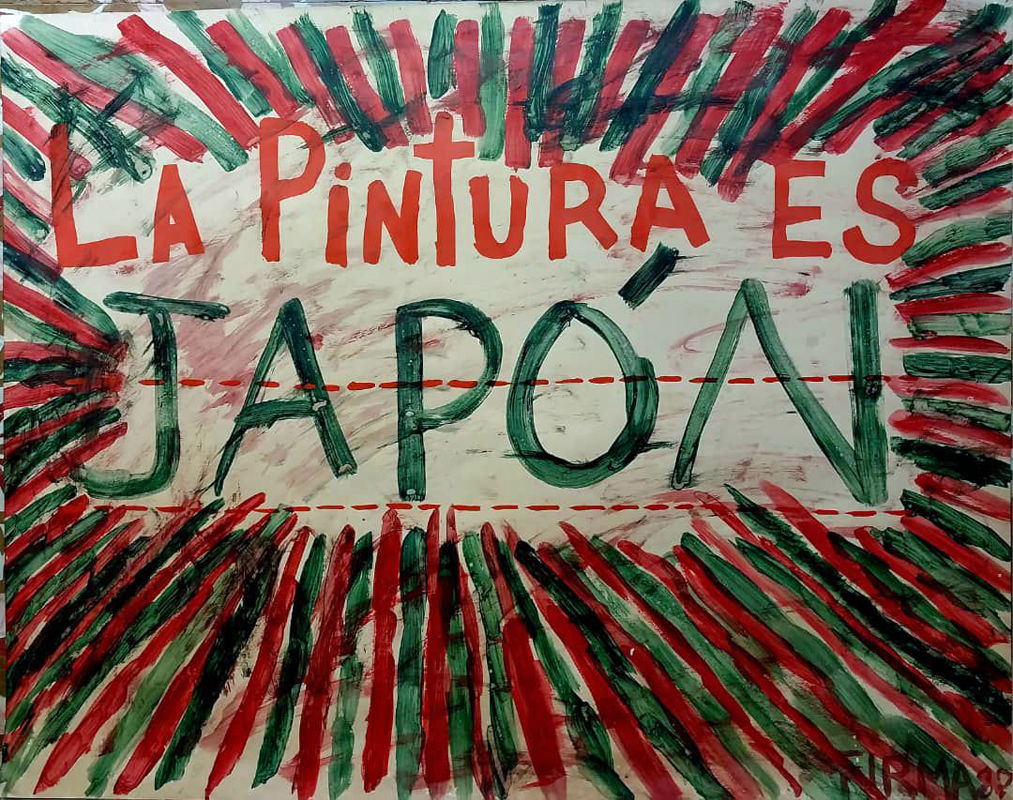
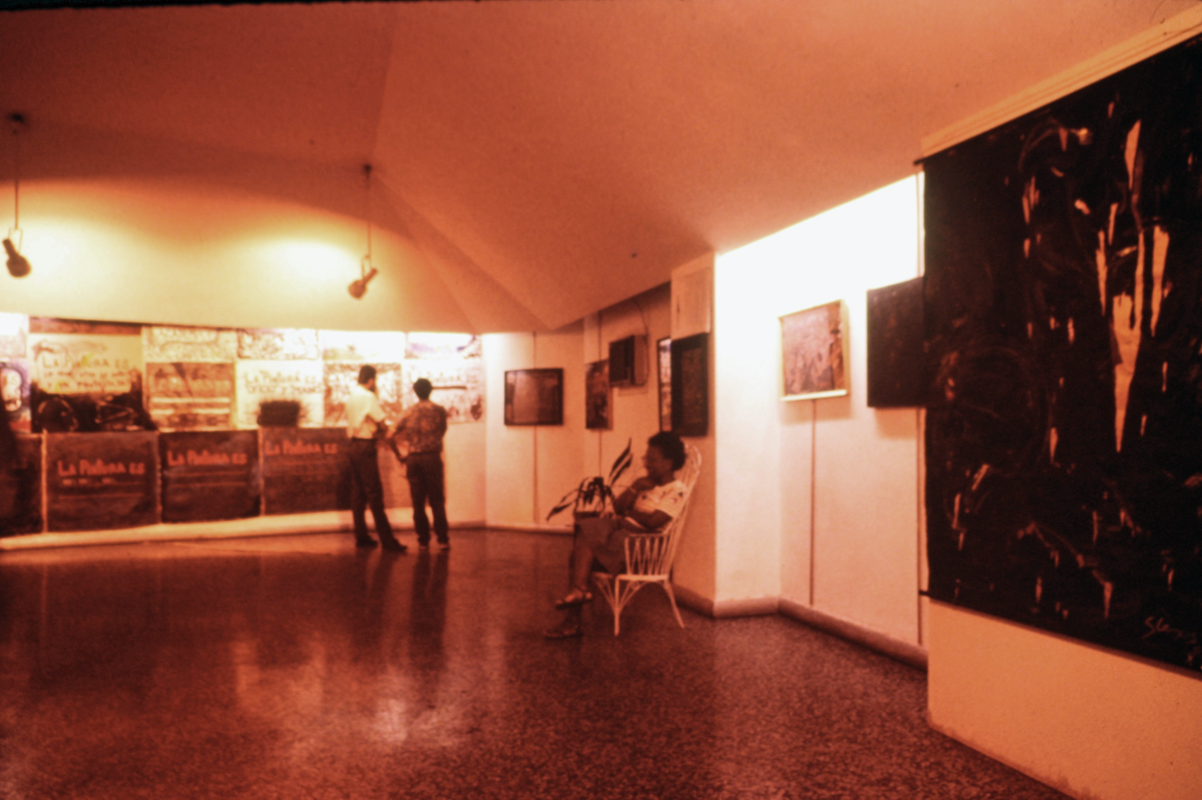

La Pintura es … (Painting is …) 1988 (Installation) series using screen printing, collage, and mixed media on cardboard (series of approximately 20 pieces, 100 x 120 centimeters each); 3 x 9 meters. Lost artwork.
The work sought to define the medium of painting by deconstructing the very requirements of what might be considered a “good painting,” even taking into account then-nascent movements like Bad Painting or postmodernism. It ridiculed the prestige of the artist through poor execution and a deliberate lack of technical skill; the accompanying texts—intentionally intellectually lightweight—offered up the obvious and a lack of seriousness. This was all the more provocative given that the project represented a major opportunity for the young artist, marking his debut solo exhibition at a prominent gallery in the capital.
Conceived as a screen-printed multiple, the piece repeated the phrase “Painting is…,” followed by two lines of dashes ( _ _ _ _ _ _ _ )—spaces that the artist filled with various options. Printed on cardboard and paper of diverse sizes and qualities, the multiples were finished with paint and collage, featuring a predominance of text, abstract gestures, signs, and outlines hinting at figuration.
Among the most significant statements completing the phrase were: …a hobby; …an irony regarding persistence; …what someone else anticipated and already painted. Ha, ha, ha; …Japan; …inherently academic; …a dream; …profound, mediocre, ‘chéa’ (kitschy) and exquisite, but—above all else—a lie!; …Post-fucking-modernism; …a lie; painting is business. In some instances, the heading itself was altered, transforming into: “Painting” is “craft” and “hand”—a sarcastic reference to technical skills—or simply: Is Painting? Additionally, commercial labels from the “Cobra” sneaker brand were incorporated, completing the phrase as “…Cobra, Cobra, and Cobra,” playing on the double meaning of the verb ‘cobrar’ (to collect/charge/get paid).
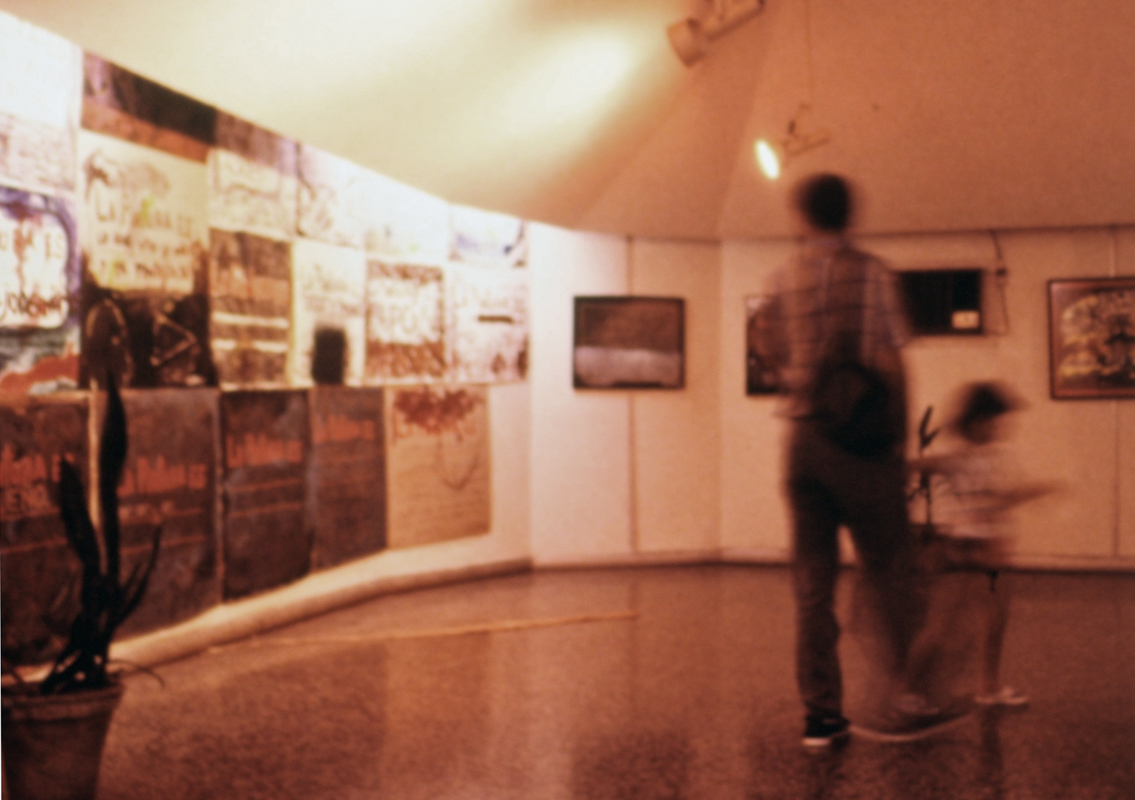
The installation—arranged at an angle, off-square, and with fragments protruding beyond the confines of the wall—existed only during the exhibition ‘To Be or Not to Be (Romantic Phase)’ at Galería Habana (November 1988).